How to Use a Bookmark: A Step-by-Step Guide
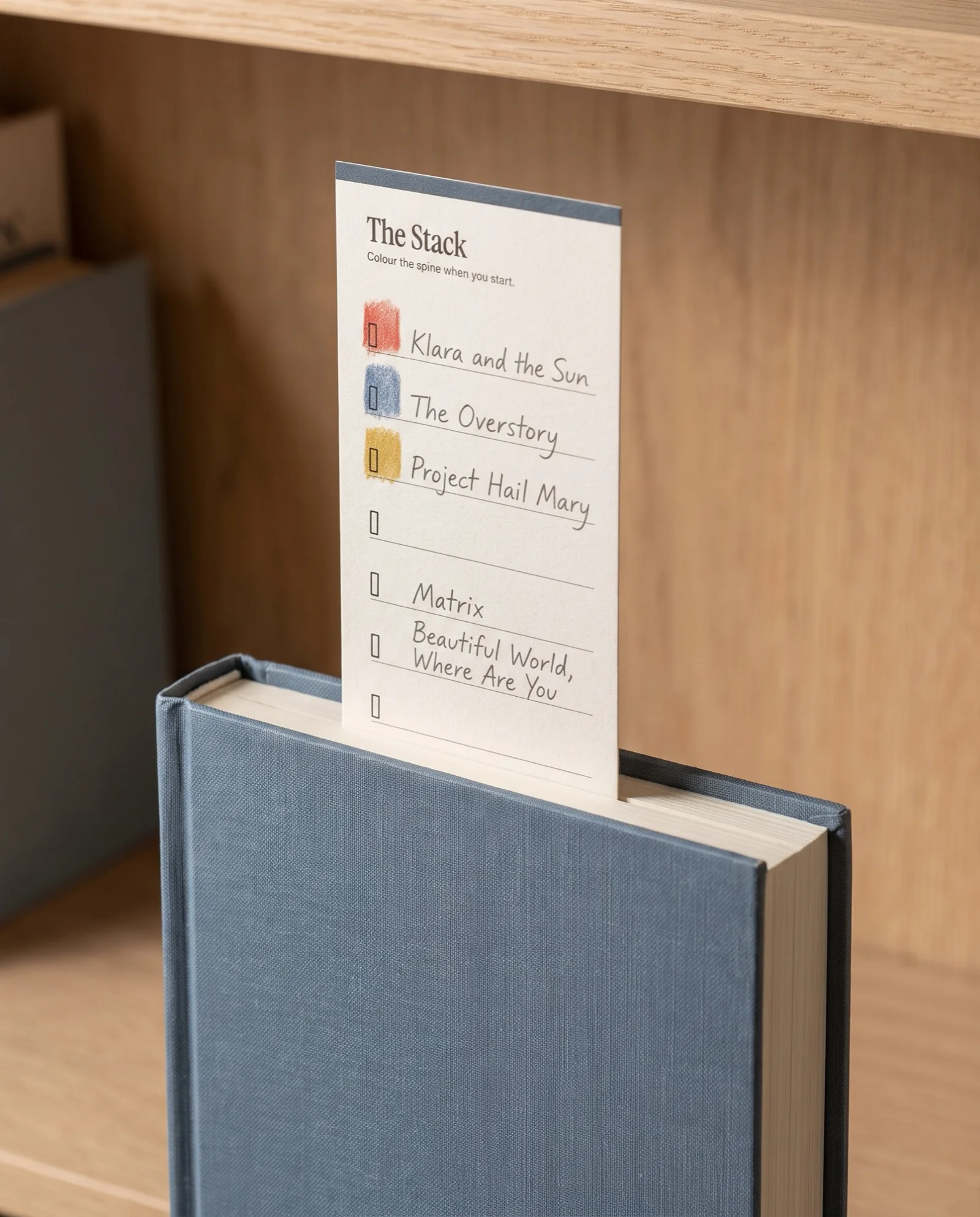
A bookmark is the simplest tool a reader owns, and a few habits decide whether it keeps your place or damages the book. How to use a bookmark made of paper or card, rather than the browser kind, comes down to three habits. Choose a thin, flat one, slide it in at your page, and take it out when the book is finished.
How to Use a Bookmark at a Glance
Five steps cover everything a bookmark can do for a book and for you. The first three protect the pages, and the last two make the bookmark worth carrying.
| Step | What you do | What it protects or gives you |
|---|---|---|
| 1 | Choose a thin, flat bookmark | The spine and the pages around it |
| 2 | Slide it in at your page | A place you can find in one move |
| 3 | Match the shape to the book | A bookmark that stays put |
| 4 | Write on the back | Progress, words and lines in the book itself |
| 5 | Take it out when you finish | Clean pages on the shelf |
Step 1: Choose a Thin, Flat Bookmark
Thin and flat is the rule that protects the spine. The National Archives article Preserving Books by Mary Lynn Ritzenthaler advises a thin piece of paper or a length of ribbon as a bookmark. It also says not to use metal clips that fit over the tops of pages, or anything thick, because they can tear and distort paper.
A strip of matte card of about 176 gsm (65 lb cover) is flat and not bulky, which suits the National Archives advice, and it feeds through most home inkjet or laser printers at actual size (100%), through the manual slot where the tray stops short. Skip the bookmark with a thick charm or a metal clasp on a book you want to keep in good shape. A hardcover with a built-in ribbon already has what it needs.
Step 2: Slide It In at Your Page
Place the bookmark between the page you stopped on and the one that follows. On a tall book the top can stand clear of the pages, and a 2 by 7 inch strip sits just inside most paperbacks, as our guide to bookmark size explains, so you open the book at the strip in one move. Close the book gently and let it rest.
Do not push a bookmark in at an angle that bends the page. The Canadian Conservation Institute advises on its page about basic care of books to try not to open a book beyond its natural opening. Laying a book face down and open to save your place forces it open in the same way, so use the bookmark instead.
Pro Tip: Set the bookmark in just before you close the book, and check that the spine sits flat on the table. A paperback that tilts on a thick bookmark is telling you the bookmark is too bulky for that book.
Step 3: Match the Shape to the Book
Three shapes cover most books. Each one holds your place a little differently, so match it to how and where you read.
| Shape | Works best for | Watch for |
|---|---|---|
| Strip of card | Paperbacks and hardcovers you carry in a bag | It can slip out when the book is tossed in a bag |
| Corner bookmark | Readers who keep losing a strip | It marks the page only at the corner, so there is little room to write |
| Ribbon | Hardcovers that have one sewn in | It cannot move to another book |
Our list of bookmark ideas shows more shapes, from corner bookmarks to tassels. If you want to make a strip yourself, how to make a bookmark walks through card, cutting and finishing.
Step 4: Write on the Back
A bookmark has a second job once you turn it over. The back is room for what you would otherwise scribble on the margin or keep in your head. Progress, words to look up and lines you want to keep all fit on a strip.
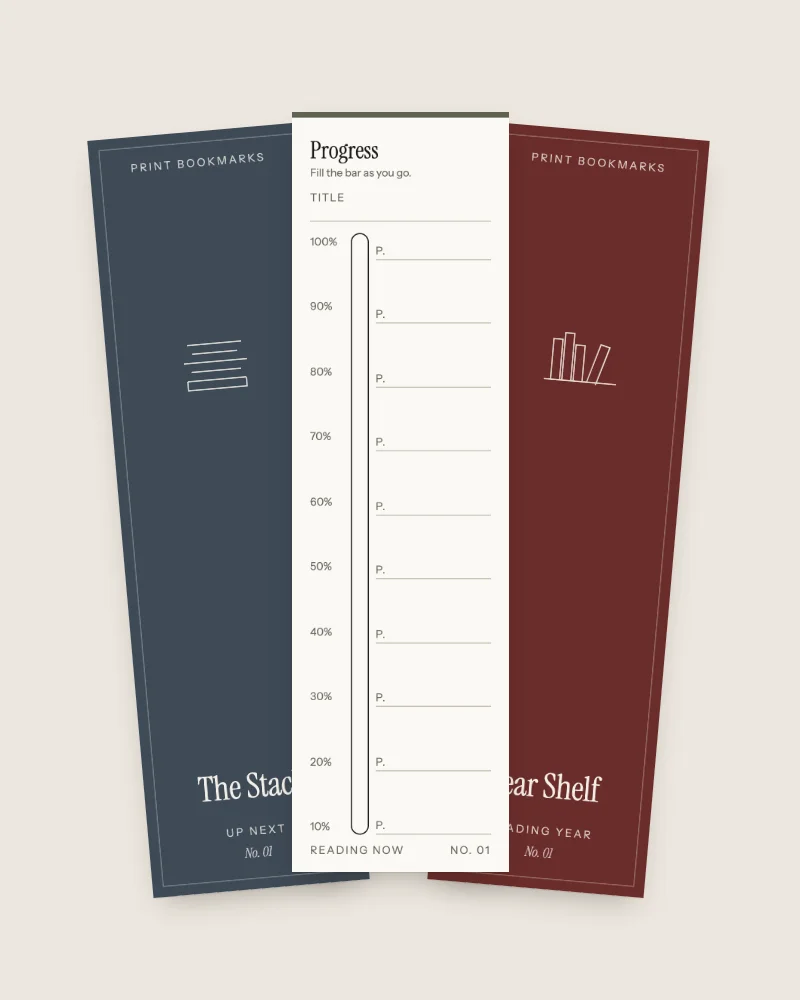
Pencil on matte card is easy to correct, and the notes stay with the book. When you finish, you can keep the bookmark as a record of that read. Our Bookmark Bundle has ruled backs made for this. Reading Now, one of the three sets, has six, which are Progress, Who's Who, Lines to Keep, Words to Look Up, Sessions and Last Page.
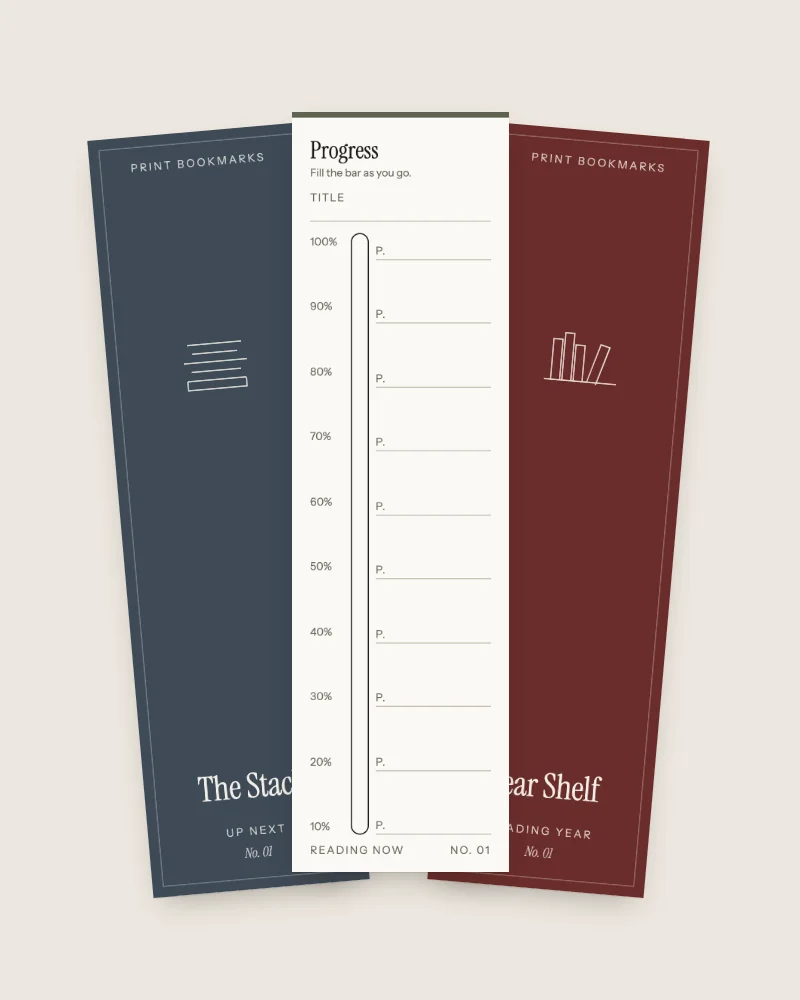
Six small uses fit on the back of one strip.
- Note the page number at each stop, so you can see your pace.
- List new words as you meet them, then look them up later.
- Copy a line you love, with its page number.
- Write a library due date where you will see it every time you open the book.
- Keep a short list of the next books on the back.
- Write a short note and give the bookmark with a book you are lending.
Lamination suits a bookmark you handle every day, because the film makes it sturdier and easy to wipe clean. The film also adds thickness, which works against thin and flat, and pencil will no longer mark it. Our guide to how to laminate bookmarks covers pouches and trimming.
Step 5: Take It Out When You Finish
A bookmark is a temporary guest. The Mary Baker Eddy Library suggests in its 15 tips for caring for your books that you use a bookmark to hold your place for a while. It also says to remove the bookmark when you finish the book.
Slip it out before you shelve the book and keep it for the next one.
Key Takeaway: A bookmark protects a book when it is thin and flat and when you take it out at the end. Metal clips, thick charms and tape do the opposite.
How to Use a Bookmark in a Library Book
Library books call for the plainest bookmark you own. Treat the book as borrowed. Library and conservation guides name a short list of things to keep out of a book, and a plain card strip is not on it.
| Habit | What can go wrong | Source |
|---|---|---|
| Folding the corner of a page | Leaves a permanent crease, and a brittle corner may break off | National Archives |
| A paper clip | Crimps and tears paper, and may rust | Dartmouth library guide |
| Sticky notes | Leave a residue on the paper | Canadian Conservation Institute |
| Tape on a page or cover | Discolors and stains paper as it ages and is hard to remove | Canadian Conservation Institute |
| A rubber band around a pile of books | Can dent covers and tear paper | Dartmouth library guide |
Each habit comes from the Dartmouth College library care guide, the National Archives article or the Canadian Conservation Institute page above. Write on the bookmark rather than on the book, because a library book has to go back as you found it.
On an e-reader the device saves your place for you. A paper bookmark only adds value there if you write on it, and our ruled trackers are the wrong choice for someone who reads only on a screen.
FAQ
How to properly use a bookmark?
Pick a thin, flat bookmark and slide it between the page you stopped on and the next. Take it out when you finish the book. Skip metal clips, thick charms and folded corners.
What can you do with a bookmark?
Besides keeping your place, you can write on the back. Page numbers, words to look up, favorite lines, a library due date and a short reading list all fit on a strip. A bookmark also makes a small gift.
Can I use a bookmark in a library book?
Yes, with a plain card or paper strip. Avoid tape, paper clips, sticky notes and rubber bands, which conservation guides say can stain, tear or dent paper. Write notes on the bookmark, not in the book.
What do I get with The Bookmark Bundle, and can I print it again?
You get a zip for each set with a US Letter PDF, an A4 PDF and a README, and a receipt email brings the download link right after payment. Print each set at actual size (100%) on matte card of about 176 gsm (65 lb cover) in a home inkjet or laser printer. Each bookmark trims to 2 by 7 inches. You may print as often as you like for you and your household, and give printed bookmarks or sheets as gifts. Please do not share or resell the file.
Conclusion
A bookmark does its job when it is thin, flat and out of the book once you finish. Slide it in at your page, pick a shape that suits how you read and use the back for the notes you would otherwise lose. On a library book, keep to a plain strip and leave the tape and clips in the drawer. Try it with your current book tonight.
Sources
- National Archives, Preserving Books, Prologue (2015) (last checked 2026-10-05)
- Canadian Conservation Institute, Basic care of books (n.d.) (last checked 2026-10-05)
- Mary Baker Eddy Library, 15 Tips for Caring for Your Books (2014) (last checked 2026-10-05)
- Dartmouth College Library, Care and handling of library materials (n.d.) (last checked 2026-10-05)