Printable Reading Log: A Step-by-Step Guide
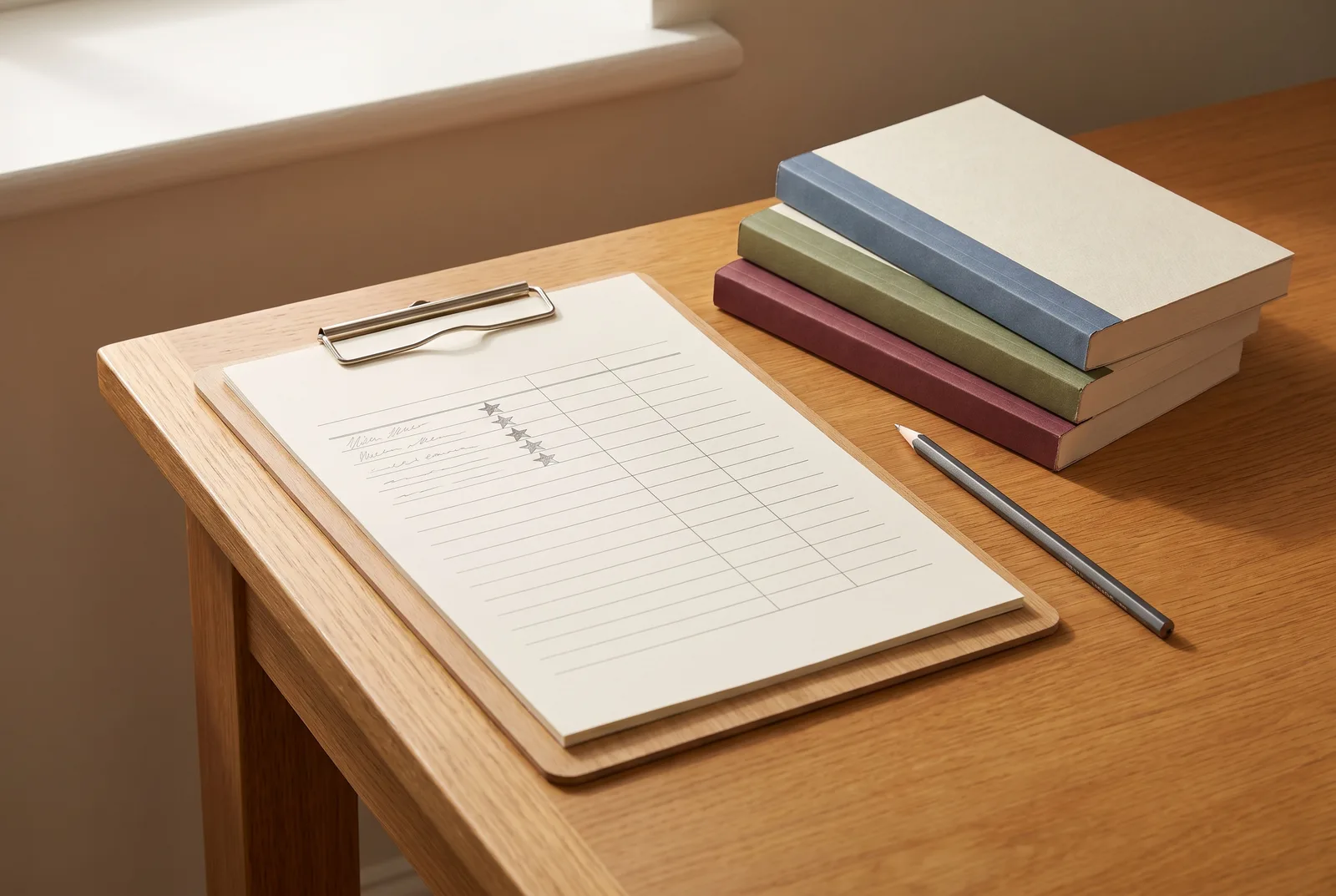
A year of reading is easy to lose once the books are back on the shelf. A printable reading log is one sheet with a line for every book you finish. You write the title, author, date, rating and a few words of your own.
What Is a Printable Reading Log?
A reading log is a plain record of the books you have finished, kept on paper you print yourself. It holds facts and little else. A reading journal adds your thoughts, and our guide to starting a reading journal covers that side.
You do not need a special system to keep one. A January 2026 roundup from Seymour Library lists reading journals, spreadsheets and several apps as ways to track books. Goodreads, The StoryGraph and Fable are among them. The library's advice is that there is no one right way, so you can try what sounds interesting and see if it works for you.
A printed sheet suits you if you like to see the whole year at once. It sits on a desk or inside a book, needs no battery and shows every title at a glance.
Most adults read at least a little. In an October 2025 survey by Pew Research Center, 75% of U.S. adults said they had read all or part of at least one book in the past year. A log keeps the books you finish, one line each, so a handful of columns is all it needs.
Step 1: Decide What Each Line Should Hold
Each line needs only the columns you will actually fill in. Seven cover almost everything an adult reader wants later. Start with title and author, then add the others once you notice you miss them. Three is a fine start.
| Column | What to write | Why it earns its place |
|---|---|---|
| Date finished | Month and day | Shows your pace across the year |
| Title | As printed on the cover | Finds the book again at a library or shop |
| Author | The full name | Shows which writers you keep returning to |
| Pages | The last numbered page | Gives a rough sense of length when you compare months |
| Format | Print, e-book or audio | Explains why an audiobook has no page count |
| Rating | One to five stars | Answers "Was it good?" without rereading any notes |
| One line | A few words in your own voice | Brings the book back faster than the title alone |
Write a rating key once, in the margin of your first sheet. For example, five stars for a book you would reread and one star for a book you finished and wish you had not. A key written once keeps a four in December worth the same as a four in January.
A log with three columns you always fill in is worth more than one with seven you skip. Title, author and the date you finished make a fine start. Our guide to what to write in a reading log goes deeper on the last column.
Step 2: Pick a Layout That Matches How You Read
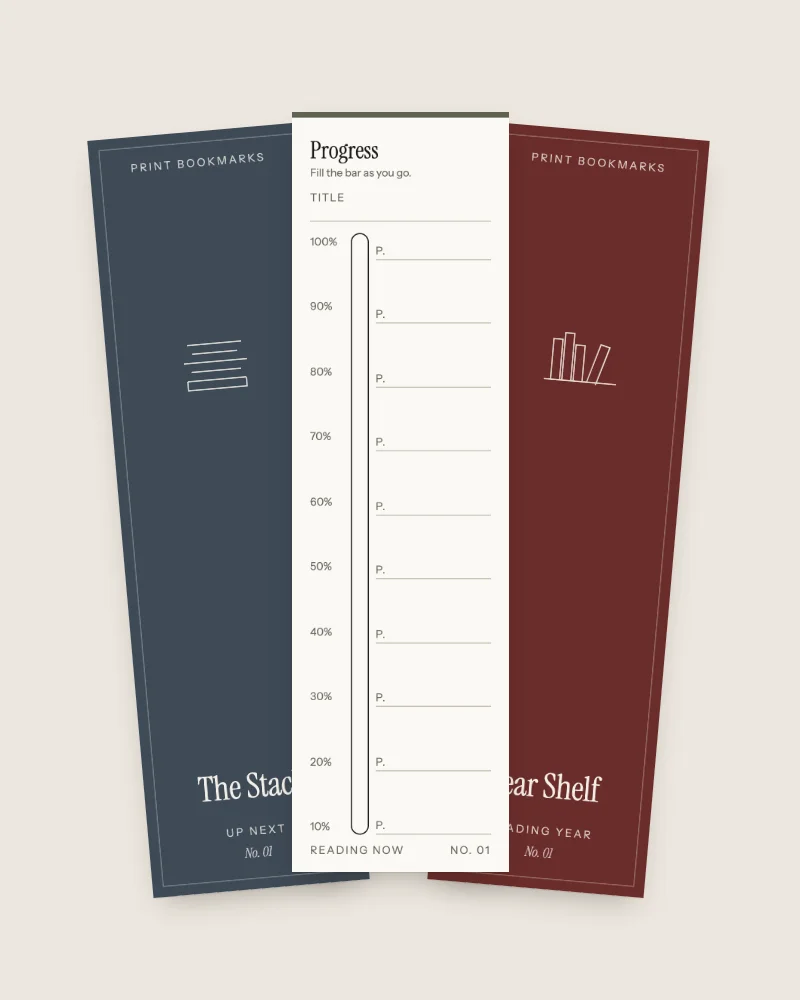
Three layouts cover most readers. No layout is wrong, and the right one depends on what you want to count. A line for each book answers how many books you finished. A page for each month with day boxes answers how many days you read. Our guide to the monthly reading log shows how to set one up. A tracker on a bookmark keeps the record inside the book.
| Layout | Best for | Watch out for |
|---|---|---|
| One line per book | Readers who want the year on one sheet | Little room for notes |
| One page per month | Readers who track days or pages | Twelve sheets to store |
| A tracker on a bookmark | Readers who jot while they read | One bookmark for each book |
Step 3: Print It at Actual Size
Print the sheet at 100%, also called actual size, so the lines keep the spacing the designer drew. Choose US Letter or A4 to match the paper in your tray, and switch off any "fit to page" option. Matte paper around 120 gsm takes pencil best.
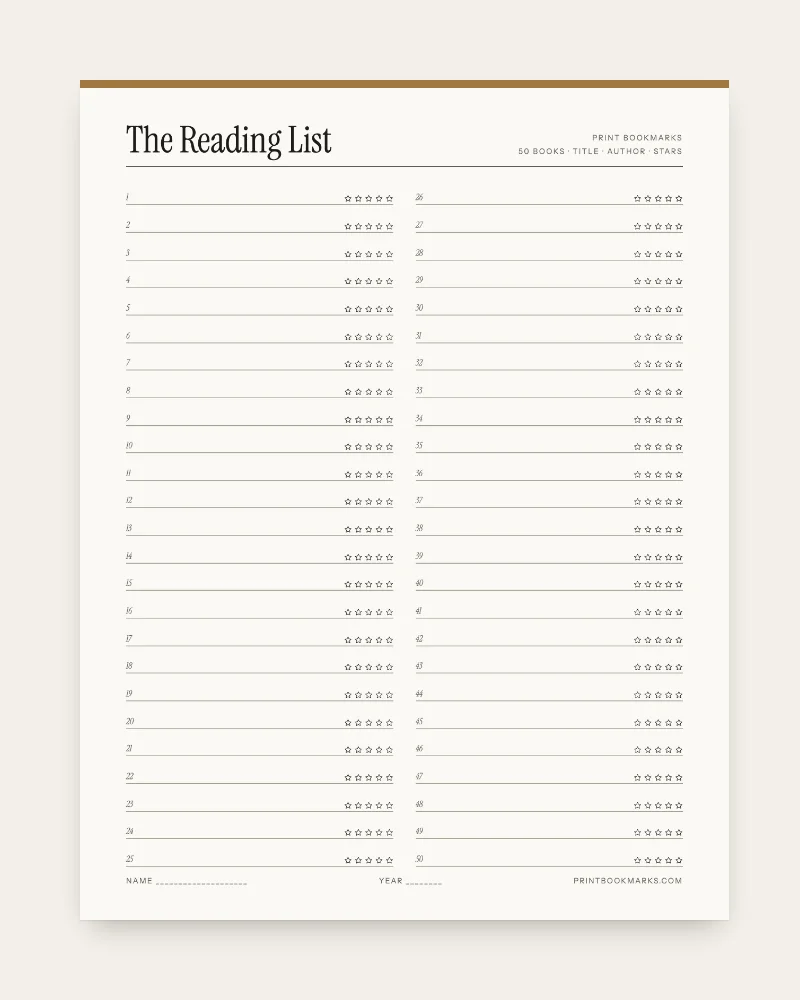
The Reading List, our fifty-line sheet, is the simplest version of this log. Each of its fifty numbered lines has room for a title and author and five stars to shade. It is one full sheet in US Letter and A4 for $4.00. Dates, pages and notes go in the margins. A ruler and the columns above are enough to draw a fuller sheet.
Pro Tip: Shade the stars in pencil. A book that grows on you can gain a star a month later. Pencil lets you change your mind without scratching out the line.
Step 4: Fill In One Line When You Finish a Book
Write the line the day you finish, while the ending is still fresh. Start with the title, author and date, then shade the stars. It takes no planning. Add a few words that would help a friend decide whether to read it.
A book you stop reading still gets an entry. Write the page where you stopped and one line on why, and mark it with a small cross instead of stars. The cross tells you later which books did not work. Avoid filling in twelve books at once in December, since the one-line details are the first thing to fade.
Step 5: Start a New Sheet and Keep the Old One
When a sheet is full or the year ends, start a clean one. Store the old sheets flat in a folder so the corners do not curl. Write the year in the corner of every sheet so the stack stays in order. Count the filled lines and note the total at the bottom. Then you are done.
After a few years the stack shows how your reading changes. You may spot a year of long novels or a stretch where you read mostly on audio.
Key Takeaway: Decide the columns first and the layout second. A log with three fields you always fill in is worth more than a detailed one you drop by spring.
When a Printed Log Is the Wrong Choice
Paper has limits. A sheet cannot sort, search or total itself. A spreadsheet or an app is the better tool if you read well over fifty books a year. The same goes if you want to filter by genre or have charts made for you. Our printed sheet is the wrong choice for that kind of reader.
Overview of the Five Steps
| Step | What you do | What it gives you |
|---|---|---|
| 1 | Choose the columns each line holds | A record you will really fill in |
| 2 | Pick one line per book, a page per month or a bookmark | A layout that fits how you read |
| 3 | Print at actual size on plain or matte paper | Lines that are neat and easy to write on |
| 4 | Fill in one line at every last page | An up-to-date log with no catching up |
| 5 | File the full sheet and start a new one | A stack that shows your reading over the years |
FAQ
What is the best way to keep track of books I've read?
Write each finished book on one line with its title, author, date and rating. A printed sheet, a notebook or a spreadsheet all work, so choose the one you will open at the last page of every book.
How do I create a reading log?
Choose the columns you will fill in, such as title, author, date finished, pages, format, rating and one line. Rule or print a sheet with a numbered line for each book, then add every book as you finish it.
What should a reading log for adults include?
Title, author and the date you finished make the core. Pages, format, a star rating and a one-line note are worth adding if you will use them later.
What do I get with The Reading List, and can I print it again?
You get a zip with a US Letter PDF, an A4 PDF and a README, and a receipt email brings the download link right after payment. Print it at actual size (100%) on plain or matte paper around 120 gsm. You may print as often as you like for you and your household, and give printed bookmarks or sheets as gifts. Please do not share or resell the file.
Conclusion
A printable reading log asks very little of you. Choose the few columns you will fill in and pick a layout. Print it at actual size and add one line at the end of every book. After a year you will have a record you can read at a glance and trust. Start with the book you are reading now.
Sources
- Seymour Library, How to Track Your Reading Goals (2026) (last checked 2026-10-05)
- Pew Research Center, Americans still opt for print books over digital or audio versions; few are in book clubs (2026) (last checked 2026-10-05)