Ex Libris Meaning: What a Bookplate Says About a Book
Ex libris is Latin for "from the books of", or, as the Library of Congress renders it, "from the library of". On a bookplate the meaning of ex libris is simple: the name after the two words is the owner of the book. The custom began in Germany in the mid-15th century, and a paper label with the same two words still does the same job today.
The meaning of ex libris
Ex libris means "from the books of". The Library of Congress gives the looser "from the library of", and both say the same thing. Whatever name follows the two words is the owner. The phrase is Latin, so it reads the same on a German plate from 1516 and on a label printed this morning.
Because the phrase opened so many labels, the label itself took the name. Yale's library guide treats ex-libris and bookplate as the same thing: labels pasted inside the front covers of books to show ownership. So "an ex libris" can mean the two Latin words or the whole label they sit on, picture included. Write "Ex libris Maria Alvarez" on a slip of paper and glue it inside the cover. In four words you have said that this book is from the books of Maria Alvarez.
The first bookplates, in Germany
The earliest bookplates come from Germany in the 15th century. The Library of Congress says they are believed to have originated there in the fifteenth century. Yale's guide puts the start of the custom in the mid-15th century. Both agree on the country and the hundred years.
The first plate depends on who you ask. The American Society of Bookplate Collectors and Designers names the Igler plate as the first known bookplate, a German label with a hedgehog on it, dated 1450. The Library of Congress gives 1516 for the earliest surviving example it describes. A gap of more than 60 years between "first known" and "earliest surviving" is less strange than it looks. A label glued into a book gets torn out or pasted over, and the book itself gets rebound.
The Library of Congress ties the spread of the custom to the spread of printing and of book ownership. More books in more hands meant more owners who wanted their name inside the cover.
The age of the bookplate
Bookplates were most common in the late 19th and 20th centuries, according to The Henry Ford. Its collection includes a plate made for Andrew Carnegie around 1915. The museum keeps such plates because they capture the design trends of their day along with the tastes of the people who ordered them. A plate from 1915 looks like 1915, in its lettering and in what the owner chose to show.
Collecting them is itself an old hobby. The American Society of Bookplate Collectors and Designers was organized in 1922 to further the study and collecting of bookplates, so the hobby is more than a century old. The Library of Congress says the popularity of bookplates lasted until the mid-twentieth century.
If you buy used books, you will still meet plates from this period, often with a name you can read. A plate is the quickest clue to where a book has been before it reached you. Look inside the front cover before you look at the sticker on the back.
What a bookplate shows
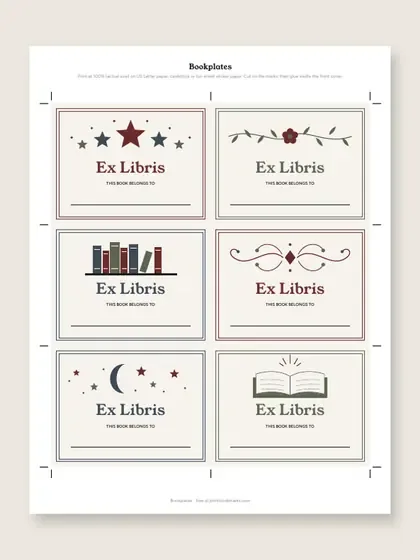
A bookplate usually carries three things. There are the words Ex Libris, or a plain-language line such as "This book belongs to", then a picture, then the owner's name or a line to write it on. A plate made for one person has the name printed. A plate from a blank sheet has the line, and the owner signs it. The Library of Congress describes the object as a personalized paper label pasted onto the flyleaf or inside the front cover.
The picture carries whatever the words leave out. The first known plate, the Igler of 1450, is named for its hedgehog, and the animal is the part people still remember. The Henry Ford's point about design trends applies to the picture most of all. The style of the drawing dates a plate about as well as a date would.
For a reader today, the plate answers two questions as soon as the book is opened: whose it is, and whether the owner wants it back. A name on a plate makes a lent book easier to return than a name scrawled on the page edge. A child who can read "This book belongs to" above their own name has learned what the Latin on older plates means.
Bookplates today
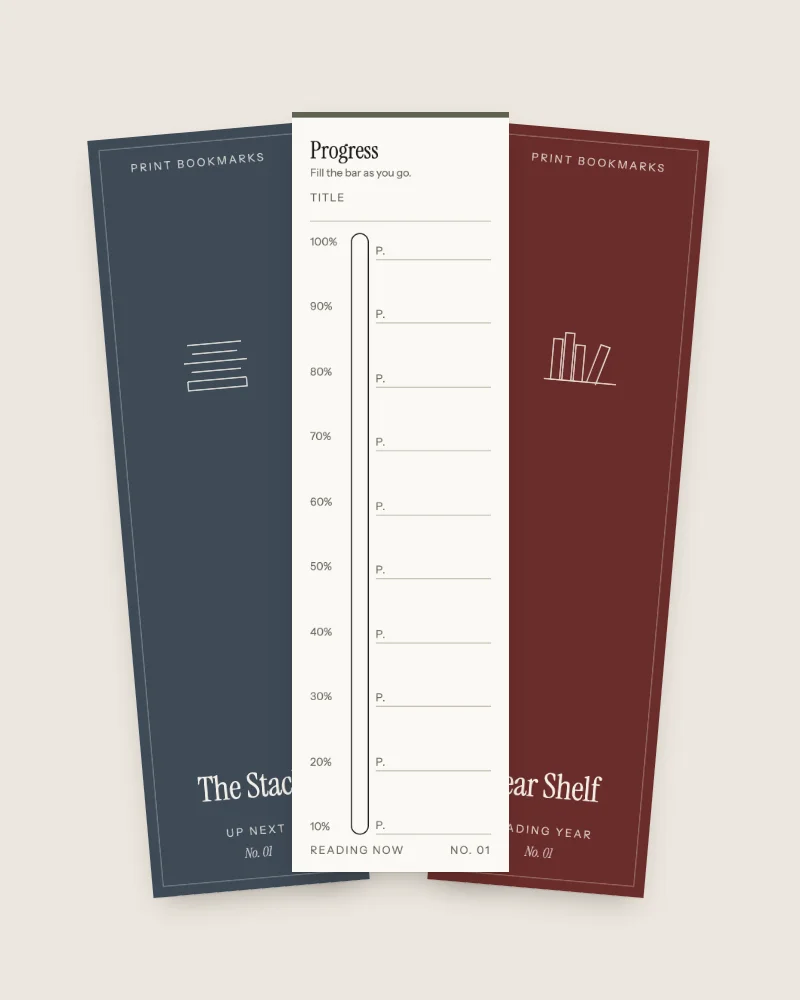
People use bookplates now for the reason they did in 1450, to keep a book tied to its owner. A plate with the recipient's name inside a book turns a plain present into a gift for a reader. Add one of the bookmarks to slip in with the book and the gift is finished without wrapping paper. A teacher can put the class name on a plate in every book of a classroom library, so a book that walks home in a backpack has an address.
For a child, the plate is a first act of ownership. Our free bookplate sheet comes as six black outlines, Ex Libris letters included, that a child can color before signing. A class can do that on the first day of school with the books it will share all year. A hand-drawn label on plain paper does the same job for a child who would rather draw the picture.
A bookplate is the wrong choice in two cases. A library book or a borrowed book is not yours to label. An old or valuable book gets a permanent label from a glued plate. If you are unsure whether the book will matter to a later owner, a name in pencil on the flyleaf is the reversible choice.
Writing your own bookplate
Write your name in full, the way you would sign a letter. A first name alone tells a stranger nothing in 20 years. If you want the plate to date itself, add the year under the name, or the city where you bought the book. For a child, "This book belongs to" and the name in their own handwriting beats a printed name.
To make the plate by hand, cut a rectangle of plain paper about 3 by 4 inches. Letter Ex Libris across the top, leave room for a drawing, and rule a line for the name. To print one instead, our printable bookplates give you six designs on a sheet, each about 3.75 by 2.85 inches with cut marks. Above the name line sits a row of stars, a leafy vine, a shelf of books, a scroll, a moon with stars or an open book.
Print at 100%, or the cut marks will not line up. Full-sheet sticker paper peels and presses on. Plain paper or thin cardstock takes a glue stick or acid-free glue.
The plate goes inside the front cover, near the top or the center of the inside board, square to the edges. Press it flat for a minute before you close the book.
Questions
What does ex libris mean on a bookplate?
Ex libris is Latin for "from the books of", and the Library of Congress gives it as "from the library of". The name written or printed after the two words is the owner of the book.
What are some examples of ex libris?
The American Society of Bookplate Collectors and Designers names the Igler plate from Germany, dated 1450 and showing a hedgehog, as the first known bookplate, and The Henry Ford holds a plate made for Andrew Carnegie around 1915. A modern example is a printed label with the words Ex Libris, a small picture and a line for a name.
Can you make a bookplate by hand instead of printing one?
Yes. A rectangle of plain paper with the words Ex Libris, your name and a small drawing, glued inside the front cover, is a bookplate in every sense. If you want a picture without drawing one, our free printable bookplates give you six designs on one sheet, in color or as outlines to color.
Sources
- Library of Congress, Crafting from Collections: Bookplates (Families blog, 2021) (last checked 2026-10-13)
- Yale University Library, Bookplates at Yale: About (n.d.) (last checked 2026-10-13)
- American Society of Bookplate Collectors and Designers, The Art of the Bookplate (n.d.) (last checked 2026-10-13)
- The Henry Ford, Ex Libris collection set (n.d.) (last checked 2026-10-13)