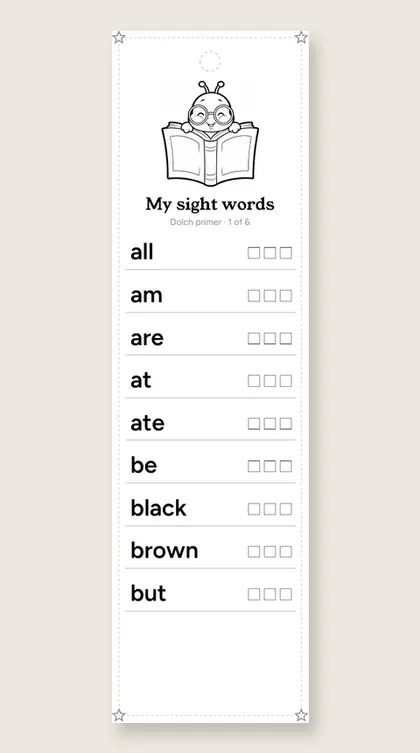
Bookmark 1
all, am, are, at, ate, be, black, brown, but
The Dolch primer sight words are the second of Edward W. Dolch's five lists, with 52 words such as he, she, like and want. Several break the spelling patterns of beginner phonics (are, was, they, who), so children learn them by sight. Most schools teach them in kindergarten, after the pre-primer list. This page has the full list, six sight-word bookmarks, flash cards, worksheets, bingo cards and tracing sheets.
all, am, are, at, ate, be, black, brown, but
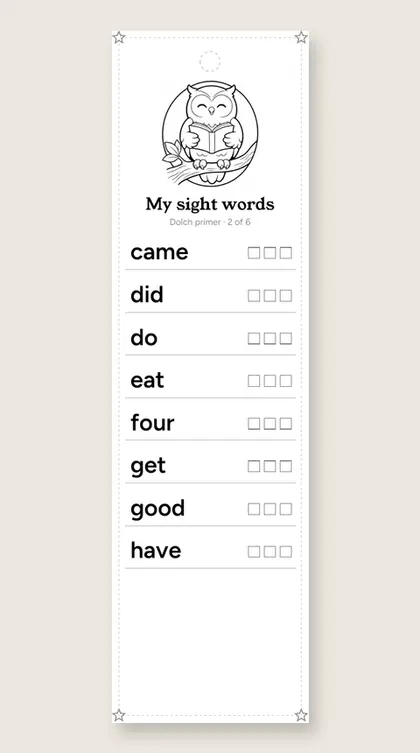
came, did, do, eat, four, get, good, have
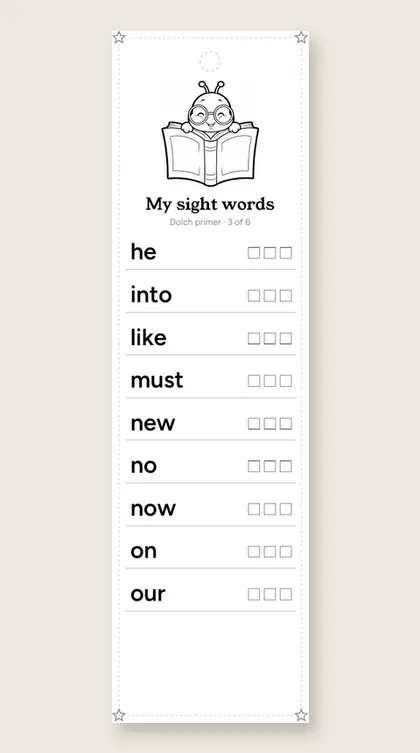
he, into, like, must, new, no, now, on, our
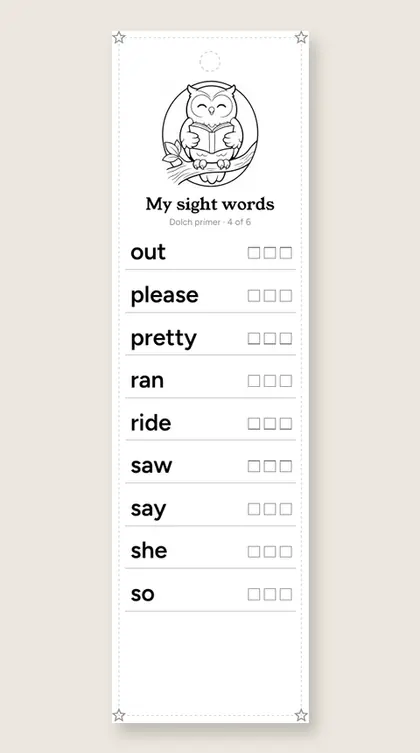
out, please, pretty, ran, ride, saw, say, she, so
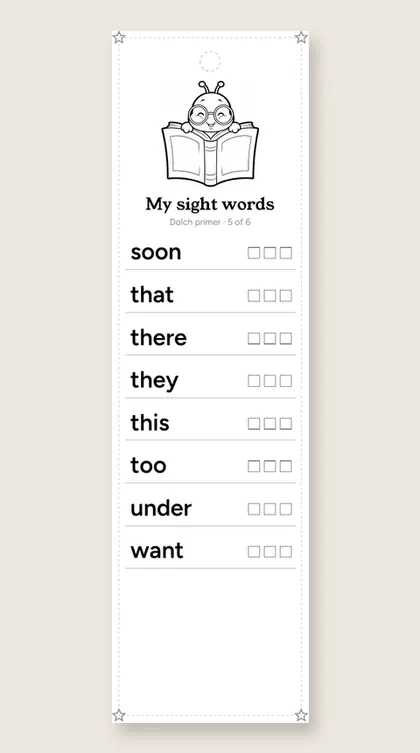
soon, that, there, they, this, too, under, want
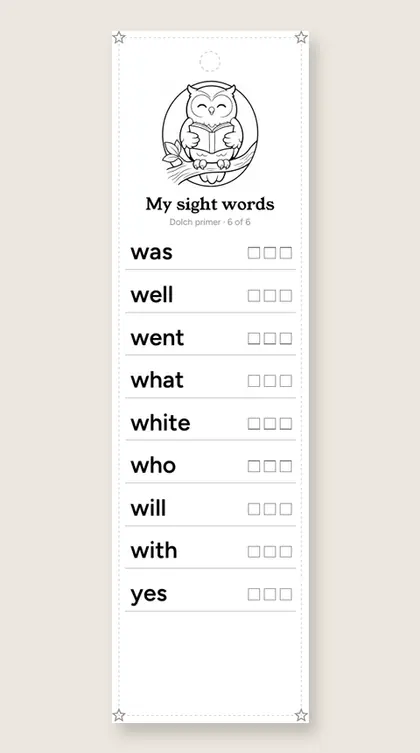
was, well, went, what, white, who, will, with, yes
| all | do | no | she | well |
| am | eat | now | so | went |
| are | four | on | soon | what |
| at | get | our | that | white |
| ate | good | out | there | who |
| be | have | please | they | will |
| black | he | pretty | this | with |
| brown | into | ran | too | yes |
| but | like | ride | under | |
| came | must | saw | want | |
| did | new | say | was |
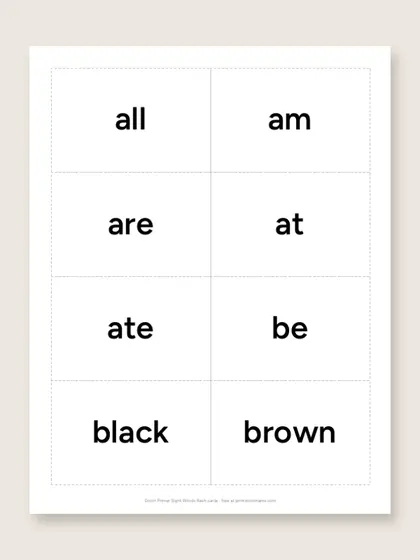
Flash cards: 52 cards, 8 to a page, with cut lines.
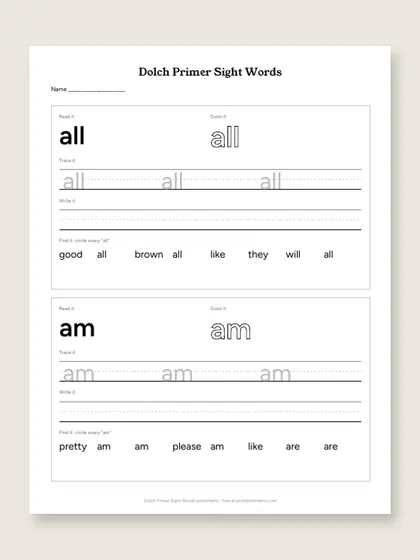
Worksheets: read it, color it, trace it, write it and find it, two words to a page.
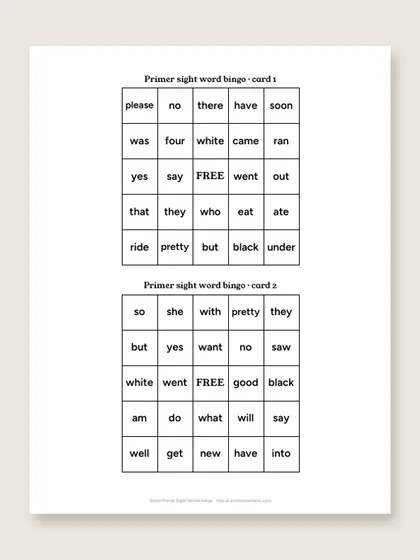
Bingo: 8 different 5 by 5 cards with a free center, two to a page.
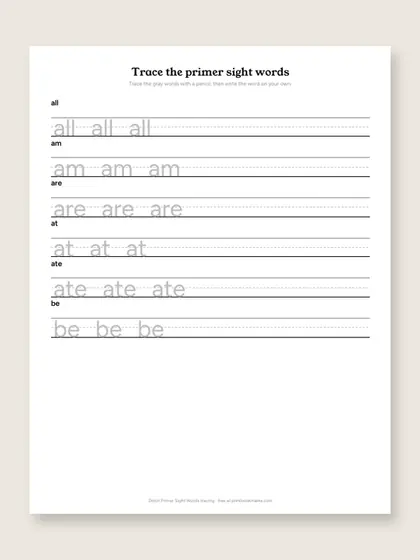
Tracing: every word three times in gray on handwriting lines, six words to a page.
Examples of Dolch primer words are he, she, like, want, went, black, white, pretty and please. The list has 52 words in all, from all to yes. Several of them, such as are, was, they and who, do not follow beginner phonics, so children learn them by sight.
Most schools teach the primer words in kindergarten, after the pre-primer list, and the first grade list follows. Start small: pick three to five words a week and look for them in a picture book first. Five minutes a day works better than one long session.
The flash card PDF has all 52 cards, eight to a page, with cut lines. Print them on cardstock (65 lb cover, about 176 gsm) so they last and the next card does not show through. Pick three to five words a week and put a card in the done pile once your child reads it without help on three different days.
Each worksheet page covers two words. A child reads the word, colors it, traces it, writes it and finds it in a row of look-alikes. The tracing sheets repeat every word three times in gray on handwriting lines, six words to a page. Plain printer paper works for both, in US Letter or A4.
The bingo PDF has eight different 5 by 5 cards with a free center, two to a page. Call a word and every player looks for it and covers it. It is a good way to practice look-alike words such as want and went, there and they, or saw and was side by side.
Everything on this page downloads as a free PDF in US Letter or A4: the six bookmarks, flash cards, worksheets, bingo cards and tracing sheets. The bookmarks hold up to ten words each with three boxes per word to tick, plus a picture to color at the top.
Dolch sight words are 220 service words in five lists, plus 95 nouns. The primer list is the second of the five, after pre-primer, and its 52 words run from all to yes. The full table sits on this page for a quick check.
The Dolch primer list has 52 words, from all to yes. The table on this page shows all of them.
The full Dolch primer list of 52 words is free to read on this page, and so are the printables made from it. Bookmarks, flash cards, worksheets, bingo cards and tracing sheets are free PDFs in US Letter or A4. Personal and classroom use is free.
The first ten words on this primer list, in ABC order, are all, am, are, at, ate, be, black, brown, but and came. The Dolch lists start earlier with the 40-word pre-primer list, and the primer list comes next.
Most schools use it in kindergarten, after the pre-primer list. The first grade list comes next.
Want and went, there and they, or saw and was are easy to confuse. Put them side by side on the find-it row of the worksheets. A round of bingo is good practice for telling them apart.
Each of the six bookmarks holds up to ten words with three boxes per word. Tick a box each time your child reads the word without help, and color the picture at the top. Three ticks means the word is known.
Plain printer paper is fine for the worksheets, tracing and bingo. Print the flash cards on cardstock (65 lb cover, about 176 gsm) so they last and the next card does not show through.
The bingo PDF has 8 different 5 by 5 cards with a free center, two to a page. Call a word, and every player looks for it and covers it. The first full row wins.
One email a week with the new bookmarks, coloring pages and puzzles. No spam, unsubscribe in one click.