What Are Sight Words, and Why Do Kids Learn Them?
Sight words are common words that schools expect a child to recognize instantly, without stopping to sound them out, such as the, and, you and said. Kids learn them because the same few words fill most of every page, and some of them break the spelling rules a beginner knows. Most schools start with a short list of 40 in preschool or kindergarten and build from there.
What are sight words, and what are some examples?
A sight word is any word a reader recognizes the moment they see it, with no sounding out. The Iowa Reading Research Center uses exactly that definition: words that can be recognized this way by a reader are known as sight words. In school the term usually means something narrower, the short list of common words a teacher wants a child to know on sight by the end of the year.
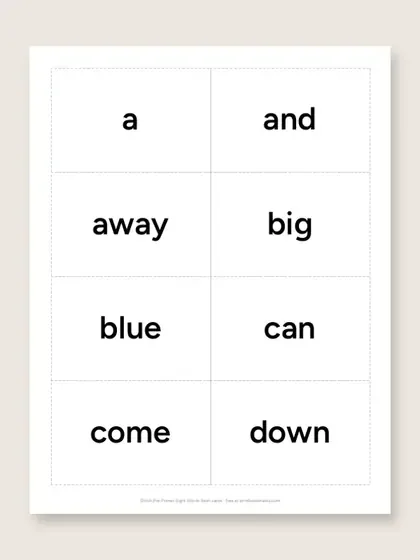
Examples from the first list most schools use are a, and, see, the and you. Two things make a word a candidate. It shows up constantly, and it is often hard to read any other way. Understood.org covers both halves. Sight words are common words that schools expect kids to recognize instantly, and because many of them don't follow the rules, kids need to learn to recognize them automatically.
A 5-year-old with beginner phonics can sound out "can" and "big". "Said" and "where" resist that, because the letters in the middle do not say what they usually say. The Dolch pre-primer level, the first 40 words, is where most children meet both kinds, in preschool or kindergarten.
Why do kids learn sight words?
Because a few dozen words do most of the work on any page. Edward William Dolch chose his 220 "service words" as the words children need to recognize in order to achieve reading fluency, as the Marshall District Library summarizes his work. The Fry list is ranked by how often each word occurs. A child who stalls on "the" and "of" stalls on nearly every line.
A beginner reading "The dog can run" has four words to get through. If "the" takes a few seconds of sounding out and still comes out wrong, the sentence is half over before it starts to mean anything. Once "the" is automatic, the child's attention goes to "dog" and "run", which carry the meaning, and to the picture.
Recognition is the start, though. Knowing a word on a card and knowing it inside a sentence are different skills. A child who reads every word on the list can still lose the thread of a page. That is where reading comprehension practice takes over, once the word list stops being the hard part.
Is there another name for sight words?
Several, and they do not all mean the same thing. That causes most of the confusion between parents and teachers. High-frequency words are the words most commonly written or spoken in English, so that label is about how often a word appears. Sight words are about how a reader processes the word. The California Scottish Rite Foundation separates the two groups: a high-frequency word is not always learned by sight, and a word a child knows by sight need not be common.
Two newer labels split the high-frequency list by spelling. Flash words are the decodable ones, such as in, and and that, which a child can sound out once they know the letter sounds. Heart words are the irregular ones, such as was, of and said, with a part the child has to learn by heart. Dolch's own term was service words, the 220 words on his main list, and he kept nouns on a separate list of 95.
So when a teacher says "high-frequency words" and the reading log at home says "sight words", they usually mean the same 40 to 220 words. Ask which list the class uses before you print anything, because the Dolch and Fry lists are built differently.
What is the difference between Dolch and Fry sight words?
Dolch's list is shorter and grouped by level, Fry's is longer and ranked by frequency, and the Fry list contains nearly all the Dolch words. The Iowa Reading Research Center notes that Fry's 1000 Instant Words include nearly all of the Dolch words, with 19 exceptions. A child working through either list meets mostly the same words. The difference is the order and how far the list goes.
| Dolch | Fry | |
|---|---|---|
| Words | 220 service words, plus 95 nouns on a separate list | 1,000 words |
| Arranged by | Level, from pre-primer upward | Frequency, in groups of 100 |
| Origin | Edward William Dolch, a 1936 journal article and the 1948 book Problems in Reading | Fry's 1000 Instant Words, expanded from a shorter list to 1,000 |
| Overlap | All but 19 of its words appear in Fry's list | Includes nearly all of Dolch |
Which one should you use? The one your child's school uses, since the point is to match what the teacher sends home. For a child of 4 or 5 starting at home before any list arrives, the Dolch pre-primer level is a 40-word first step, and the kindergarten list continues from there. If the school hands out Fry's first 100 instead, work from that. The 19 exceptions aside, the two lists are teaching the same words in a different order.
How do you teach sight words at home?
A few words a week, read in a real book first, then on cards, then in the child's own writing. The Dolch pre-primer page suggests three to five words a week and five minutes a day, and counts a word as known once the child reads it without help on three different days. That pace suits a 4-year-old or 5-year-old. A 6-year-old who already reads a little can take a larger set.
One week with four words, in order:
- Pick a picture book you already own and find the four words in it. Read the page aloud and let the child point to each one as it comes up. The library does this job as well as anything printed.
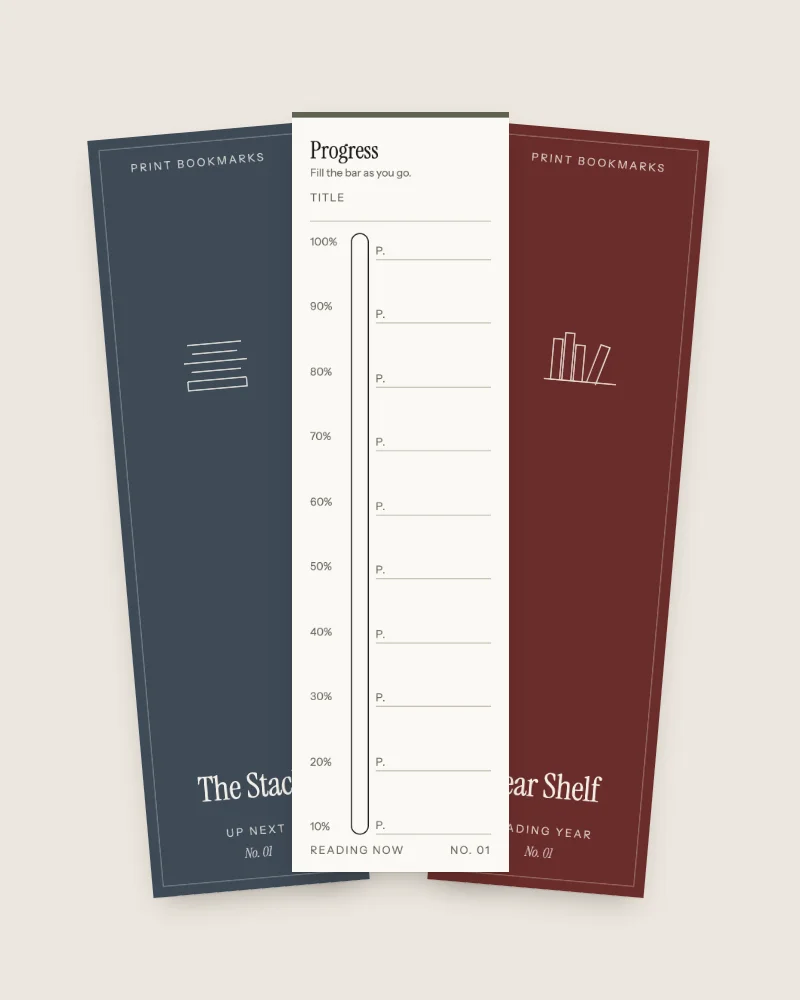
- Bring out cards for those four words only. Index cards written by hand are fine. If you want them printed, our free Dolch pre-primer sight words page has flash cards eight to a page, four bookmarks with ten words each, bingo and a tracing sheet. If the class uses Fry's list, print the school's list instead, since the words and the order will differ.
- For a heart word like said, sound out the letters that behave (s and d) and mark the part that does not (ai), so the child memorizes two letters instead of five.
- Have the child write each word once inside a sentence of their own, and play one of the games that practice them at the end of the week.
The usual mistakes are putting all 40 cards on the table in one sitting and testing a word before the child has seen it in a book. Teaching two look-alikes such as where and when in the same week is another. Keep the cards to the five minutes and let the book do the rest. Hole-punching and cutting the cards is adult work for a 4-year-old. Coloring the bookmark pictures and ticking the boxes is theirs.
Are sight words good or bad for children? The phonics debate
The worry is that children memorize whole words as shapes and never learn to decode. The Iowa Reading Research Center's answer is that sight word teaching must be accompanied by instruction in phonics. In its account, most words become sight words once a reader has processed the sound-symbol relationships in them. That process is what Ehri (2014) calls orthographic mapping.
Three facts frame the debate. First, high-frequency words are often decodable. The research center describes them as decodable words that frequently occur in printed English, and the California Scottish Rite Foundation gives in, and and that as examples. Drilling those as pictures skips a skill the child could use on thousands of other words.
Second, some sight words are irregular. Understood.org's definition rests on this: many don't follow the rules, so kids need to learn to recognize them automatically. For was, of and said, some memorizing is unavoidable, and the heart-word approach limits it to the odd part of the word.
Third, the lists are old. Dolch published his words in 1936 and again in his 1948 book, and the orthographic mapping work the research center cites is from 2014. The list says which words; the later research says how to teach them.
In practice, 40 words taught beside letter sounds, three to five a week, is the combination the research center describes. A 220-word list drilled on flash cards in place of phonics is where the critics have a case. If your child's class sends home a list and spends its reading time on sounds, that is the pairing. If the list is the only reading instruction, ask the teacher where phonics comes in.
Sources
- Iowa Reading Research Center, University of Iowa, Teaching Sight Words as a Part of Comprehensive Reading Instruction (2018) (last checked 2026-10-13)
- California Scottish Rite Foundation, The Importance of Understanding Word Categories in Early Reading (2025) (last checked 2026-10-13)
- Understood.org, What are sight words? (2019) (last checked 2026-10-13)
- Marshall District Library, Learning to Read (n.d.) (last checked 2026-10-13)
- GreatSchools Editorial Team, Dolch sight word nouns: preK-3rd grade (2024) (last checked 2026-10-13)